
Diving in the Canary Islands works all year: water temperature sits between roughly 18 °C and 24 °C, visibility regularly reaches 30 metres and currents are generally mild, especially on the sheltered southern coasts. The volcanic seabed builds caves, arches, tunnels and drop-offs that make each island feel different, and the archipelago's position in the Atlantic brings together tropical fish, rays, turtles and angel sharks.
In short
Diving in the Canary Islands works all year thanks to the subtropical climate: water temperature usually sits between 18 °C and 24 °C, and visibility is generally good, better in the drier, less windy months. Many divers travel here in November or December precisely because conditions stay mild when most of Europe is cold. Spring, from March to May, and autumn, from September to November, are considered the best windows: pleasant temperatures in and out of the water, and fewer tourists.
The archipelago is full of sites worth the trip. The Marine Reserve of El Hierro, with La Restinga and La Caleta, offers caves, arches and remarkable diversity. The Chinijo Archipelago Marine Reserve, around La Graciosa, includes Roque del Este and Roque del Oeste in crystal-clear water. In Tenerife, the Montaña Marine Reserve has whimsical rock formations and underwater tunnels with cuttlefish, crustaceans and rays, and El Puertito de Armeñime is known for green turtles, seahorses, nudibranchs and rays. El Bajón in La Palma adds rocky arches and manta rays, and La Concepción Bank in Fuerteventura large schools of fish, rays and angel sharks.
The marine life is the reason the islands punch above their weight: sitting at a crossroads of Atlantic currents, they hold tropical fish such as parrotfish, angelfish and butterflyfish, plus rays, angel and hammerhead sharks, sea turtles, cetaceans, moray eels, octopus and black coral. To start diving here you only need the will to explore and a course: a try dive if you want a first taste, or the Open Water if you want a certification that travels with you.
The hard part is choosing where. Seven islands, each with its own character, its own flagship dive sites and its own difficulty level. This guide goes island by island, then covers conditions, marine life, marine reserves, the best months and what certification you need before you go.
Why the Canaries work as a year-round destination
The subtropical climate is the whole argument. Water and air stay mild through the winter, which is why a large share of Canarian diving happens in November, December and January, when the rest of Europe is unusable. There is no closed season.
Underwater, the islands are young volcanoes that fall away steeply into deep Atlantic water: dramatic topography close to shore — walls, lava tubes, arches and boulder fields — and access to deep-water species from sites you reach in a short boat ride, or in some cases walk into from the beach. Add direct flights from most European cities and a dense network of dive centres and the case is hard to beat.

Island by island: where to dive
Every island has one site it is known for. Use these as anchors.
Tenerife
The busiest and most accessible diving island. Montaña Amarilla, in Arona, mixes white sand with volcanic formations and tunnels at around 5 to 25 metres, suitable for almost any level. El Puertito de Armeñime, in Adeje, is one of the most reliable places in Europe to dive with green turtles. Los Gigantes puts you under the cliffs of the same name at roughly 10 to 30 metres, and Abades, in the southeast, has two shore-entry sites to a maximum of about 18 to 20 metres. On the east coast, Radazul and Tabaiba give access to deeper profiles and a small wreck.
Lanzarote
Home to the Museo Atlántico, Europe's first underwater sculpture museum, off Playa Blanca: around 300 figures by Jason deCaires Taylor at roughly 12 metres, shallow enough for entry-level divers and steadily colonising with marine life. The north of the island offers a wilder kind of diving.
Gran Canaria
El Cabrón, near Arinaga, is the reference site: a marine reserve with canyons, arches and caves across a wide depth range, and one of the richest fish communities in the archipelago. The wrecks off Puerto de Mogán, at around 18 metres, are an easier and very popular alternative.
Fuerteventura
Quieter and more open. The reef and bank systems around the island are known for large schools of fish, rays and angel sharks, with gentle sandy-bottomed sites that work well for training dives.
La Palma
El Bajón, on the west coast, is a vertical structure with rocky arches that drops into deep water, with visibility that rarely falls below 30 metres. Las Cabras is more demanding at around 30 to 40 metres, for experienced divers only, and Las Cruces de Malpique sits at about 20 metres.
El Hierro
The purist's choice. La Restinga and the Mar de las Calmas marine reserve offer caves, arches, exceptional visibility and some of the warmest water in the archipelago, averaging around 23 to 24 °C. Remote, protected and consistently rated the best diving in the Canaries.
La Graciosa and La Gomera
La Graciosa and the northern islets of Lanzarote form one of the largest marine protected areas in Europe, with crystal-clear water around Roque del Este and Roque del Oeste. La Gomera is the least developed, with volcanic arches at around 20 metres and very little traffic.

Which island should you choose for your level?
The question most guides skip, so here is a direct answer. If you are combining diving with a family holiday, Tenerife, Gran Canaria and Lanzarote have the most infrastructure and the shortest transfers; if diving is the whole reason for the trip, El Hierro and La Graciosa are worth the extra journey.
- Complete beginner or first certification: Tenerife or Lanzarote. Shallow, sheltered, warm, with the widest choice of dive centres.
- Newly certified, looking for variety: Gran Canaria. El Cabrón alone justifies the trip and adapts to any level.
- Comfortable and experienced: El Hierro and La Palma, for deep walls, big structures and open Atlantic water.
- Photographers and macro hunters: Tenerife's south coast and Fuerteventura's sandy bottoms, for turtles, seahorses, nudibranchs and rays.
- Something different: Lanzarote's Museo Atlántico, which is genuinely unlike anything else in Europe.

Learn to dive with us
Start diving wherever you travel
The SSI Open Water course takes three days and travels with you; a Try Scuba day is a single session if you just want to see how it feels underwater.
Conditions: temperature, visibility and currents
Water temperature runs from around 18 °C in winter to about 24 or 25 °C in late summer, with El Hierro at the warm end. A 5 mm wetsuit covers most of the year; a 7 mm or a hood is comfortable in midwinter and on deeper profiles. Visibility is generally good and often excellent, commonly quoted as up to 30 metres and best in the drier, less windy months; it drops after strong swell, particularly on north-facing coasts.
Currents are usually mild, one of the archipelago's real advantages, but exposure matters. Southern coasts are sheltered from the prevailing trade winds and calm most of the year; northern coasts are more exposed, more technical and occasionally unworkable. When a centre tells you the north is off today, that is the right call.

Marine life, and the angel shark
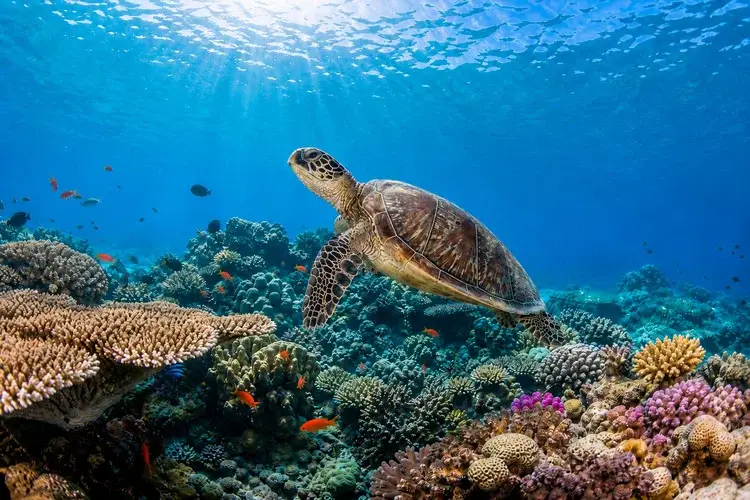
The Canaries punch above their size biologically because they sit at a crossroads of Atlantic currents, mixing temperate and tropical species. Expect parrotfish, angelfish, butterflyfish, groupers, barracuda, trumpetfish, moray eels, octopus, cuttlefish, nudibranchs and several species of ray. Green turtles are common at specific sites, black coral grows on the deeper walls, dolphins and pilot whales are regular in the channels and hammerheads appear seasonally around El Hierro.
The species that makes the archipelago genuinely special, though, is the angel shark, Squatina squatina. It is a flat, bottom-dwelling shark that buries itself in sand, and it has been all but wiped out across its historical range from Norway to West Africa. It is listed as Critically Endangered by the IUCN, and the Canary Islands are now regarded as its last stronghold — the one place where sightings remain reliable, most often in the cooler winter months.
If you find one, treat it accordingly: keep your distance, do not corner it, do not touch the sand around it, and no flash. Several local research projects collect sighting reports from divers, and yours is genuinely useful data.
The marine reserves that make it possible
Protection is why several of these sites are still worth diving. The Canaries hold some of the most significant reserves in Spanish waters: Punta de La Restinga–Mar de las Calmas in El Hierro; La Graciosa and the northern islets of Lanzarote, among the largest marine protected areas in Europe; the deep reserve off La Palma; and local reserves such as Montaña Amarilla and El Cabrón.

When to go
You can dive every month, so the question is about trade-offs. Spring, from March to May, and autumn, from September to November, are the classic recommendations: pleasant temperatures in and out of the water and fewer tourists. Broadly, May to October gives the calmest sea and the best visibility, with late summer the warmest water. Winter is the quietest season, needs a thicker suit, and is the best window for angel shark sightings.

What you need to dive there
Beyond the desire to explore, you need a certification — or a guided try dive if you have never breathed underwater. A try dive is a single supervised session in shallow water: fine as a taste, not a qualification. The certification that travels with you is the Open Water, which lets you dive with any centre, anywhere, to 18 metres.
Our schools are in Thailand and Indonesia, not in the Canaries, so if you want to arrive in Tenerife or El Hierro already certified, that is where we come in. The SSI Open Water course takes three days in warm, clear water and small groups, and is recognised by every centre in the Canary Islands; see the full range on our beginner courses page. If you are already certified, the Advanced Adventurer course adds deep and navigation dives and takes you past the 18-metre limit.
Getting there and moving between islands
Tenerife South (TFS) is the main gateway, with direct flights from most European cities; Gran Canaria, Lanzarote and Fuerteventura also have international airports, and the smaller islands are reached by short flights or ferry. Practicalities are easy: euros, 230 V plugs, Spanish with English widely spoken in tourist areas, and no time difference from the UK. Regulators and computers travel better in hand luggage.
Diving responsibly
Everything above depends on the sites staying healthy, and the Canaries are heavily visited. A few habits carry most of the weight.
- Get properly trained with a recognised agency. Good buoyancy is the single most effective conservation tool a diver has.
- Do not touch or chase marine life, and keep your distance from resting animals, particularly angel sharks and turtles.
- Take nothing. Shells, rock and coral belong where they are.
- Keep gear streamlined so nothing drags across the bottom.
- Use reef-safe sunscreen and take your waste home with you.
- Respect reserve rules on anchoring, numbers and access — they are the reason there is anything to see.
Plan your dives
- Diving courses for beginners with DPM
- Open Water Course: your first certification
- Diving in Thailand with DPM
- Diving in Indonesia with DPM
- The 5 best places to dive in Tenerife
FAQ
Frequently asked questions
When is the best time to dive in the Canary Islands?
You can dive all year, but spring (March to May) and autumn (September to November) are considered the best: pleasant temperatures and fewer tourists.
What is the water temperature?
It usually ranges between 18 °C and 24 °C throughout the year, which makes diving comfortable in any season.
What is the visibility like?
Generally good across the archipelago, varying with the location and the weather, and usually better in the drier and less windy months.
Which are the best dive sites?
The El Hierro Marine Reserve, the Chinijo Archipelago around La Graciosa, the Montaña Marine Reserve and El Puertito de Armeñime in Tenerife, El Bajón in La Palma and La Concepción Bank in Fuerteventura.
What marine life can you see?
Tropical fish such as parrotfish, angelfish and butterflyfish, along with rays, angel and hammerhead sharks, sea turtles, cetaceans, moray eels, octopus and black coral.