
The best dive sites in Koh Tao split into three groups: the offshore pinnacles for depth and big fish, the shallow bays around Koh Nang Yuan for first dives and training, and a handful of wrecks and swim-through sites for divers who already have some experience. Chumphon Pinnacle, Sail Rock, Japanese Gardens, White Rock, Shark Island, Southwest Pinnacle, Green Rock and Hin Wong Bay are the eight that matter most.
In short
The best dive sites in Koh Tao cover every level. Chumphon Pinnacle, with granite pinnacles rising from the seabed, brings barracuda, giant grouper and, in the right season, whale sharks; its depth and occasional currents make it a site for intermediate and advanced divers. Sail Rock, technically between Koh Tao and Koh Phangan, is famous for its 'chimney', a vertical formation you can spiral up or down, with schools of barracuda, batfish and the odd whale shark.
For a first dive, Japanese Gardens, near Koh Nang Yuan, is calm and shallow, full of tropical fish, clownfish and turtles. White Rock is one of the largest and most varied sites, with garden eels in the sand and barracuda and turtles around the reef, and it works day and night. Hin Wong Bay, on the east coast, is the quiet corner: corals, small reef fish, rays and cuttlefish, best at low tide.
More experienced divers head for Shark Island, with reef sharks, rays and a mix of hard and soft corals but strong currents on its eastern side; Southwest Pinnacle, a chain of submerged pinnacles covered in anemones where fusiliers, jacks and the occasional bull shark pass by; and Green Rock, a playground of small caves and swim-throughs with triggerfish, turtles and reef sharks.
Between 25 and 30 sites are catalogued around the island, almost all within a 20 to 45 minute boat ride. Water sits near 29 degrees all year. What changes site to site is depth, current and what swims past, so this guide is organised by what you can actually dive rather than by popularity.
Why Koh Tao has so many dive sites in such a small space
Koh Tao is a granite island, and the same rock that forms its headlands continues underwater as boulders, ridges and pinnacles. That topography, combined with a sheltered western coast and warm, shallow water, produces an unusual density of sites: reef dives, pinnacle dives and wrecks all within a short boat ride of the same pier.
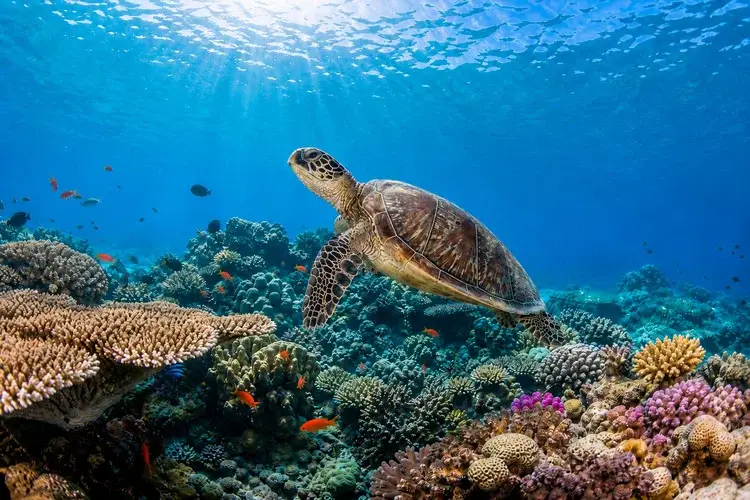
The island has been known as Turtle Island for decades, and green and hawksbill turtles are still the animal most people remember from their first dive here. Conditions are forgiving enough that Koh Tao certifies an enormous number of new divers each year, but the offshore pinnacles are serious dives with real current, which is what keeps experienced divers coming back.

The offshore pinnacles: depth, current and big fish
These are the sites people travel to Koh Tao for. They sit in open water, they attract schooling and pelagic fish, and they generally call for an Advanced certification or at least solid buoyancy and air consumption.
Chumphon Pinnacle
The most famous site on the island: a granite pinnacle rising from the seabed, generally dived between roughly 14 and 35 metres. Barracuda, giant grouper, batfish and clouds of fusiliers hold station around the rock, and it is the single most reliable spot for whale sharks when they pass through, most often around April to May and September to October. Depth and occasional current make it an intermediate to advanced dive.
Sail Rock
Technically halfway between Koh Tao and Koh Phangan and widely rated the best dive site in the Gulf of Thailand. Its signature is the Chimney, a vertical swim-through you can spiral up or down, entering deep and exiting at around 4 to 6 metres. Expect barracuda, batfish and trevally, and whale sharks in season. It is a longer boat ride, often an hour and a half, so it is usually sold as a day trip with two dives. Dive it early to avoid the crowd.
Southwest Pinnacle
A chain of submerged pinnacles about 10 km offshore, carpeted in anemones and soft coral, dived roughly between 7 and 30 metres. Fusiliers, jacks and grouper school around the top; bull sharks turn up occasionally. It is exposed, so it can run current. Early morning gives the best visibility and the quietest water.

Shallow sites for first dives and training
The sheltered bays on the west coast and around Koh Nang Yuan are where almost everyone does their first dives. They are calm, shallow and packed with reef fish, which is exactly what you want when you are still thinking about your buoyancy rather than looking around.
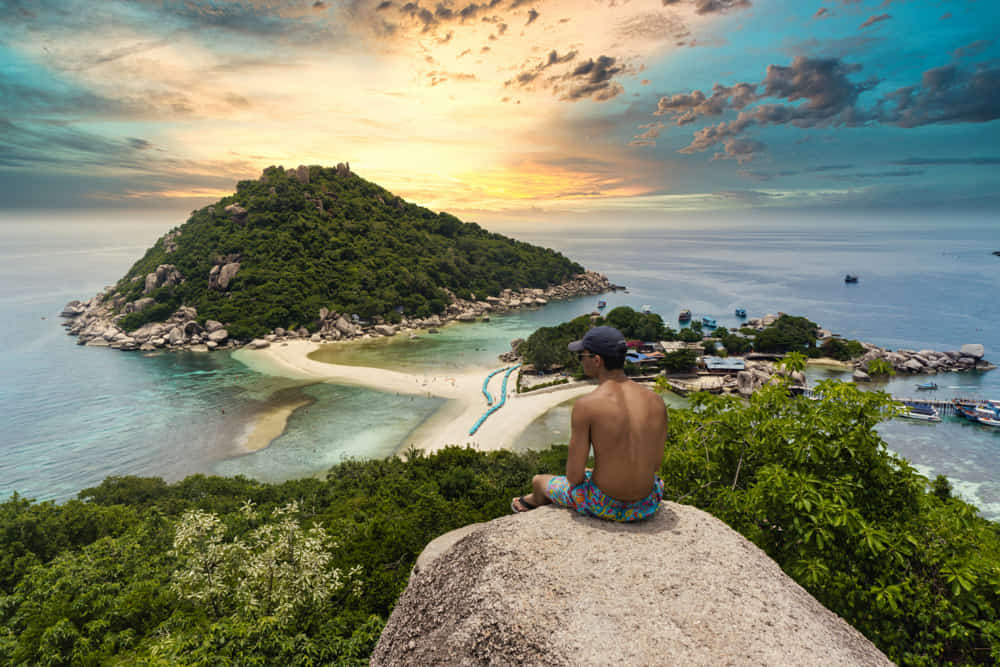
- Japanese Gardens (roughly 2-16 m): next to Koh Nang Yuan, calm and shallow, full of butterflyfish, angelfish, clownfish, blue-spotted stingrays and turtles. Also a superb snorkelling spot.
- Twins (roughly 5-18 m): two coral-covered pinnacles separated by a sandy channel, sheltered enough to dive almost year-round. Clownfish, moray eels and stingrays.
- Mango Bay (roughly 2-14 m): a sandy-bottomed bay in the north that works as a nursery for juvenile fish and as a textbook Open Water training site.
- Aow Leuk (roughly 3-16 m): a sheltered bay with coral gardens, garden eels and consistently good visibility, and a solid macro dive.
- Junkyard and the artificial reefs (roughly 5-12 m): purpose-sunk structures used for buoyancy practice and coral restoration, with batfish and lionfish that have moved in.

Dive with us in Koh Tao
Turtles are better from 12 metres down
Our instructors dive these sites every week. Start with the one-day Try Scuba or get certified with the three-day SSI Open Water course, always in small groups.
Reefs for turtles and everyday fish life
If you want the sort of dive you would happily repeat three times in a week, this is the group. Depths are moderate, currents are usually mild, and the reef itself is the attraction.
White Rock is the island's workhorse and one of its largest sites, dived from about 5 to 22 metres: garden eels in the sand, barracuda and turtles around the reef, and titan triggerfish that can get territorial in nesting season. Hin Wong Bay, on the quieter east coast, is a peaceful dive over hard coral with rays, cuttlefish and small reef fish, best at low tide when visibility settles. Shark Bay in the south is shallow enough to snorkel and is the most reliable turtle spot on the island. Tanote Bay, also on the east side, has dramatic topography including an underwater rock arch and the occasional blacktip reef shark.
Swim-throughs and topography: Green Rock and Shark Island
Green Rock is a jumble of granite boulders forming caverns, archways and swim-throughs, dived roughly between 5 and 28 metres. It is the most playful site on the island and a favourite for divers who want something other than a reef. Triggerfish, turtles and the occasional reef shark live there, and the swim-throughs mean it rewards good buoyancy and a torch.
Shark Island, a small islet named for its fin shape rather than its residents, offers a mix of hard and soft corals across roughly 5 to 28 metres, with blacktip reef sharks, turtles and nudibranchs. Its eastern side can run strong current, which makes it a good place to learn drift technique with a guide, while the western side stays calmer.
The wrecks
The HTMS Sattakut, a 48-metre former US Navy landing craft, was deliberately sunk off Hin Pee Wee in 2011 and sits between roughly 18 and 30 metres. It is intact, colonised by grouper, barracuda and nudibranchs, and the standard first proper wreck dive on Koh Tao. Depth puts it firmly in Advanced territory.
Two more Thai Navy vessels were sunk as artificial reefs in 2023 and are now part of the rotation, also in the 13 to 30 metre range and dived as advanced or technical training sites. If wrecks are why you are coming, the Advanced Adventurer course is the natural step, since it includes the deep dive that opens these sites up.
Night dives
Koh Tao is one of the easier places in Asia to try a first night dive, because the shallow sheltered sites work just as well after dark. White Rock is the classic choice: crabs, shrimp, hunting predators and sleeping parrotfish. Sairee Reef, dived from the shore, and Twins are the other two regulars, and on the right night the bioluminescence in the water column is the thing people remember rather than the fish.
When to dive and what you will see
Water temperature stays close to 29 degrees all year, so a 3 mm suit or a shorty is enough whatever month you come. Visibility is what varies. The most consistently good stretches run roughly March to May and again July to September; June can be windy with reduced visibility, and late October to December brings the roughest sea in the Gulf, when the offshore pinnacles are sometimes cancelled in favour of sheltered bays.
Whale sharks are the wildcard. They are most often reported around April to May and September to October, at Chumphon Pinnacle, Southwest Pinnacle and Sail Rock, but there is no season that guarantees them. Our month-by-month breakdown is in the best time to dive in Koh Tao.
Which sites match your certification
Most Koh Tao sites are accessible with an Open Water certification and its 18-metre limit: Japanese Gardens, Twins, Mango Bay, Aow Leuk, White Rock, Hin Wong Bay, Shark Bay and the shallower parts of Shark Island and Green Rock all work. That is a full week of diving without going deeper.
Chumphon Pinnacle, Southwest Pinnacle, the Sattakut and the deeper sections of Sail Rock need an Advanced certification, and in practice they also need decent air consumption, because a 30-metre dive on a pinnacle is short if you breathe hard. If you are starting from zero, the Open Water course takes three days; if you already have it, the Advanced Adventurer course takes two and unlocks the rest of the list.
To plan the trip around the diving, see our dive school in Koh Tao, the overview of diving in Thailand and, for the logistics, how to get to Koh Tao.
Plan your dives
FAQ
Frequently asked questions
Which is the best dive site in Koh Tao?
Chumphon Pinnacle is the most famous, with granite pinnacles, barracuda, giant grouper and whale sharks in season, although its depth and currents suit intermediate and advanced divers.
Where can beginners dive in Koh Tao?
Japanese Gardens, near Koh Nang Yuan, has calm, shallow water with tropical fish, clownfish and turtles, and also works well for snorkelling.
Where can I see whale sharks in Koh Tao?
At Chumphon Pinnacle and Sail Rock, in the right season and with a bit of luck.
Which site is best for a night dive?
White Rock, where crabs, shrimp and other nocturnal creatures come out after dark.
Are there strong currents in Koh Tao?
At some sites, yes. Shark Island can run strong on its eastern side, and Chumphon Pinnacle and Southwest Pinnacle also see occasional current.
Check the sites with our Koh Tao team
See the dive-site section of our Koh Tao school and tell us your certification and recent experience. The team selects sites according to the group and conditions.