
Where to stay in Nusa Penida depends on which side of the island you want to see. Toyapakeh and the northwest are the practical base, close to the main port, the restaurants and the dive centres. Crystal Bay is the quiet west-coast option. Ped and Sampalan give you the flat, easy north coast. Atuh and Diamond Beach are the remote east, and Jungut Batu on Nusa Lembongan is the lively alternative.
In short
Where to stay in Nusa Penida comes down to three main areas on the island, plus a fourth on nearby Nusa Lembongan. Crystal Bay is the quiet, less developed choice, famous for its sunsets and for diving and snorkelling, with bungalows and small beachside boutique resorts. Toyapakeh is the most developed area and the best equipped for diving, with a lively local community, restaurants and shops, and everything from cheap hostels to full-service resorts close to the port.
Atuh Beach, on the far side of the island, is a picturesque and little-visited beach known for its rock formations. Access is awkward, so accommodation is more limited and rustic: cabins by the sand or bungalows up on the hill overlooking the bay. Jungut Batu, on Nusa Lembongan, is a short boat, speedboat or ferry ride away and offers a lively beach with water sports, nightlife and beachfront resorts.
Nusa Penida covers around 200 square kilometres, so the areas are close enough to reach by motorbike or even bicycle, though some roads are rough: if you plan to move around a lot, stay near a port or a main road. Choose by what you want to do — close to the dive sites if you are diving, near Kelingking Beach or Angel's Billabong if you are sightseeing — and book ahead in high season, when availability drops and prices rise.
The island covers around 200 square kilometres, which sounds small until you drive it: the roads are steep and often rough, so an hour on the map can be ninety minutes in reality. Picking the right area, and the right arrival port, is the difference between a relaxed trip and a week on a scooter.
How Nusa Penida is laid out
The developed side of Nusa Penida is the north and northwest: that is where the ports are, where most accommodation sits and where you find restaurants, shops and ATMs. The famous viewpoints are strung along the south and southwest coast, Kelingking Beach, Angel's Billabong and Broken Beach among them, while the east coast holds Atuh and Diamond Beach and the Thousand Islands viewpoint. The interior is hills and jungle.
Your first decision is made before you land. Boats from Bali arrive either at Banjar Nyuh and Toyapakeh in the northwest or at Sampalan and Buyuk in the northeast, and the two are an awkward drive apart. Match your ticket to your accommodation and you save yourself an hour on day one. Our guide on how to get from Bali to Nusa Penida covers which boats go where.

Toyapakeh and the northwest: the practical base
Toyapakeh is the most developed part of the island and the obvious first choice, especially for a first visit. It has the highest concentration of accommodation, restaurants, cafes, shops and scooter rentals, a vibrant local community, and it sits right by the main harbour, so you are not driving anywhere after a boat crossing.
It is also the best-equipped area for diving, with easy access to the most popular sites. Accommodation runs the full range, from cheap hostels to full-service resorts: Coco Resort Penida sits very close to the port with modern facilities, and Manta Cottage Seaview Plus has panoramic views from a strategic position for reaching the dive sites.
The trade-offs are traffic when the ferries unload and narrow roads nearby. Reckon on roughly 20 to 30 minutes to Kelingking Beach and 40 minutes or more to the east coast.

Crystal Bay and the west coast
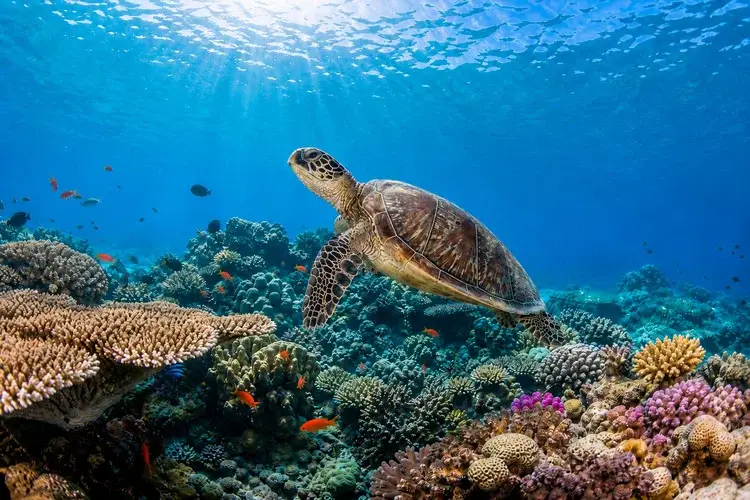
Crystal Bay is the quieter, less developed choice, famous for its sunsets and for being one of the best snorkelling and diving spots on the island. It is the area for people who want beach and nature over restaurants and nightlife.
Accommodation here leans towards bungalows, such as Penida Bay Village, and small beachside boutique resorts like Astiti Penida Resort and Spa, which has a restaurant, spa and pool in a relaxed setting. You are close to the west-coast viewpoints and to the bay itself, which is both a swimming beach and a dive site, but the choice of places to eat outside your hotel is limited.

Ped and Sampalan: the easy north coast
The strip of north coast running east from Toyapakeh through Ped to Sampalan is the most comfortable part of the island to be based in and the one most guides overlook. The terrain is flat, the coastal road is in good condition, restaurants and warungs are spread along it, and the sunsets are excellent.
It also works well if you arrive at Sampalan or Buyuk rather than Banjar Nyuh. The downside is distance: everything on the south coast is a longer drive than it would be from Toyapakeh. This is the area for travellers who want somewhere calm to come back to and do not mind putting in the kilometres.

Dive with us in Nusa Penida
Stay near the port, dive every morning
Our SSI school in Nusa Penida is set up for exactly that: a one-day Try Scuba or the three-day Open Water course, in small groups, between beach days.
The wild east, the interior and Nusa Lembongan
The three remaining options are for travellers who want something other than convenience: seclusion, jungle or nightlife.
Atuh and Diamond Beach
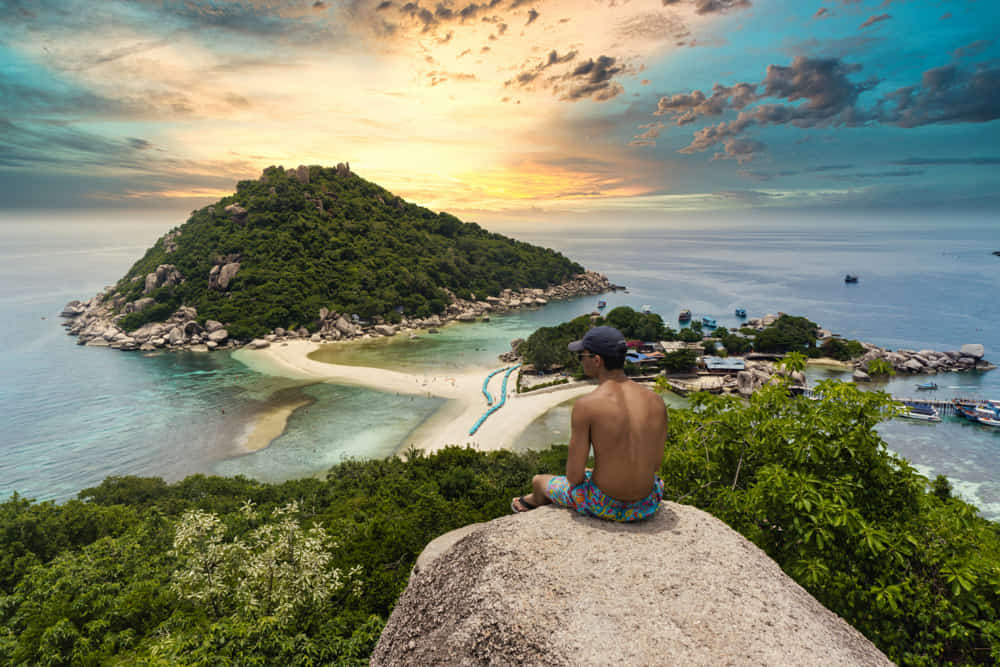
Atuh Beach is a picturesque and comparatively little-visited beach known for its rock formations, and Diamond Beach next door is one of the most photographed spots in Indonesia. The east is the wildest part of Penida: dramatic, quiet, and the best place on the island to watch the sunrise.
Access is awkward, so accommodation is more limited and more rustic. Atuh Garden Bungalow offers cabins beside the sand, and The Gamat Bay has classic bungalows on a hill overlooking Atuh Bay. What you gain is seclusion and scenery; what you give up is choice of restaurants, nightlife and quick access to the west. Count on around an hour and a half from Toyapakeh on the inland roads.
The central interior
The middle of the island is hills and jungle, roughly half an hour from either coast by scooter. Services are thin on the ground, but it is the only choice that puts both sides of Penida within equal reach, and it is markedly cooler and quieter than the coast.
Jungut Batu, on Nusa Lembongan
Jungut Batu is not on Nusa Penida at all, but it is a genuinely popular base thanks to its proximity and transport links: boats, speedboats and ferries connect the two islands all day, and the crossing is short.
It is a lively beach with a wide range of water sports and a real nightlife, plus resorts such as Indiana Kenanga Boutique Hotel and Spa, a luxury boutique property by the beach, and Lembongan Beach Club and Resort, which is more family and activity oriented. It suits travellers who want more of an evening scene than Penida offers and are happy to day-trip across.

Where to stay if you are coming to dive
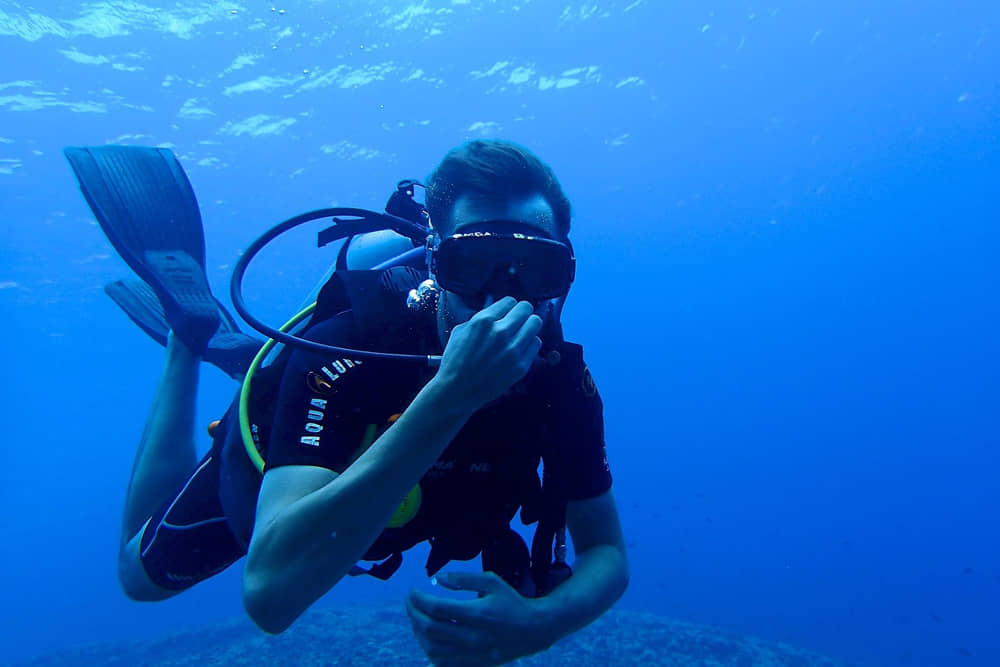
Diving changes the calculation completely, because the boats leave early and the currents, not your itinerary, set the schedule. Toyapakeh is the most developed area for diving and the strategic base for reaching the popular sites, with dive centres and the harbour on your doorstep. Crystal Bay is the alternative if you want quieter diving and snorkelling straight off the beach.
Staying an hour away on the east coast and driving in before dawn for a 7 a.m. boat is possible, but it is not a holiday. If you plan to dive more than once, sleep near the water you are diving. Our dive school in Nusa Penida runs morning departures to Manta Point and Crystal Bay, and if you are starting from zero the Open Water course takes three days, which fits neatly around beach days.
For the sites themselves, see where to dive in Nusa Penida and our guide to diving with manta rays at Manta Point.
Types of accommodation and what they cost
Penida covers every category, and prices sit slightly above mainland Bali for equivalent quality because everything has to arrive by boat.
- Bungalows and cabins: single-storey structures in bamboo and wood, sometimes with shared bathrooms. The most authentic option and the most common on the east coast.
- Guesthouses: simple, family-run and the best value if you want contact with the island rather than a pool.
- Hostels and dormitories: shared or private rooms with common areas, concentrated around Toyapakeh.
- Boutique hotels and resorts: smaller properties with personalised service, spas, pools and restaurants.
- Private villas: several bedrooms, full kitchen, garden and pool. Ideal for families or groups.
- Eco-lodges and glamping: sustainability-focused builds in remote spots, and luxury tents with real beds.
Getting around from wherever you sleep
Nusa Penida is small enough to cross in about an hour on the main roads, but the secondary roads to the viewpoints are steep, narrow and often broken up. Scooter rental starts at roughly 100,000 IDR a day and is the standard way to get around, but it is only sensible for confident riders; hiring a driver for the day, around 600,000 IDR, is the calm alternative and worth every rupiah on the inland routes.
A few practicalities that shape where you stay: ATMs are far less common than in Bali, so carry cash; fuel stops are sparse outside the north; and if you plan to move around a lot, staying near a port or on the main coastal road saves more time than staying near any single attraction.
How many nights, and how to split them
Two or three nights is the realistic minimum to see one side of the island properly without spending the whole time on a scooter. Four to six nights lets you take both coasts at a relaxed pace, and if you are diving you will want at least that, because a day of diving is a day not spent at viewpoints.
The strategy that works best is splitting the stay: two nights in Toyapakeh or the northwest for the port, the dive sites and the western viewpoints, then two nights near Atuh or Diamond Beach for the east coast and the sunrise. You avoid the worst of the driving and you see two genuinely different islands.
Book ahead in high season, around the summer holidays and the December to January peak, when availability drops and prices rise. And check reviews for the specific property rather than the area: standards on Penida vary far more within a neighbourhood than between neighbourhoods. For how the destination fits a longer trip, see the overview of diving in Indonesia.
Plan your dives
FAQ
Frequently asked questions
Which is the best area to stay in Nusa Penida?
Toyapakeh if you want services, the port nearby and good diving facilities; Crystal Bay for a quieter stay with excellent snorkelling; Atuh Beach for nature and seclusion.
Where should I stay if I am going diving?
Toyapakeh is the most developed area for diving and a strategic base for reaching the most popular dive sites. Crystal Bay is the alternative for quieter diving and snorkelling.
What types of accommodation are there in Nusa Penida?
Bungalows and cabins, guesthouses, hostels and dormitories, boutique hotels and resorts, private villas, eco-lodges and glamping.
Can I stay on Nusa Lembongan and visit Nusa Penida?
Yes. Jungut Batu, on Nusa Lembongan, is a popular base thanks to its proximity and its boat, speedboat and ferry connections.
Do I need to book accommodation in advance?
In high season, yes: availability is limited, prices rise and the most popular places sell out quickly.